


What is RTT?
Transforming the beliefs that have been running your life - without you even knowing it.
What is Rapid Transformational Therapy®?
World-renowned therapist, Marisa Peer, developed Rapid Transformational Therapy® (RTT) after more than 30 years of working with clients and refining what creates lasting change. RTT brings together elements of these modalities to help uncover and update the beliefs formed earlier in your life that may still be shaping how you feel and respond today.
Hypnotherapy
Psychotherapy
Cognitive Behavioural Therapy (CBT)
Neuro-Linguistic Programming (NLP)
Neuroscience
RTT works by accessing the subconscious mind - the part of you that formed beliefs early in life and has been quietly running the show ever since. A 2024 meta-analysis found that hypnosis demonstrated positive effects across a range of mental and physical health outcomes, supporting its value as a therapeutic intervention.
Most of the patterns we struggle with today began as coping strategies. RTT helps you understand why those strategies were created - and gently replace them with beliefs that serve who you are now.
“In order for you to change, the first step is that you’ve got to become conscious of your unconscious thoughts. You’ve got to start looking at those hardwired thoughts that you think every day that are just circuits that have been fired and wired together.”
/ Dr Joe Dispenza /
Why the subconscious matters
You can consciously want change… and still feel stuck.
That’s because lasting change doesn’t happen at the surface level of willpower. It happens at the level where the original belief was formed.
Your subconscious mind stores:
Early memories
Emotional associations
Identity beliefs (“I’m not good enough”, “I have to please everyone”, “I’m not safe,” etc.)
Protective strategies
RTT works directly with this deeper layer.
When the root belief shifts, the pattern no longer needs to continue.
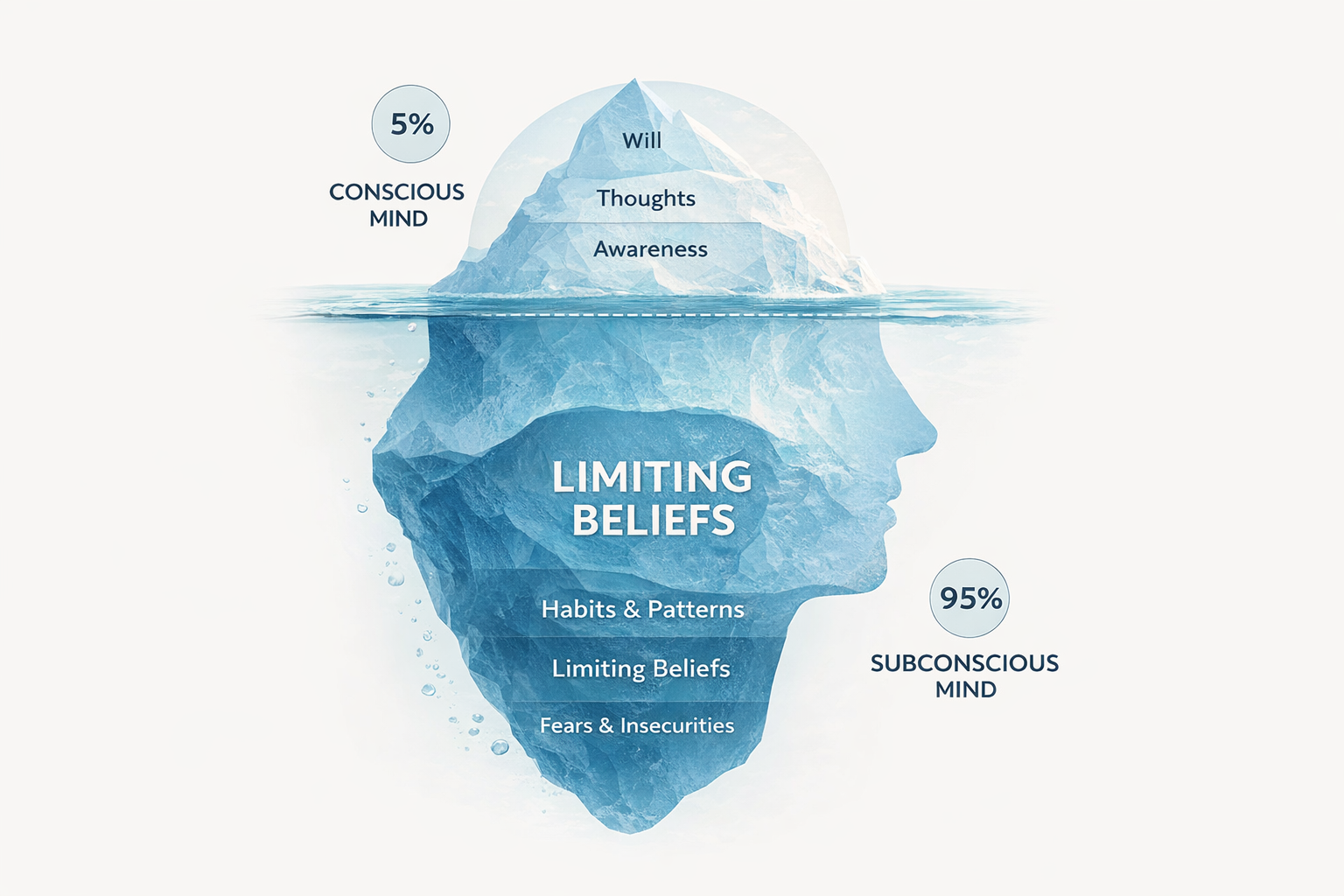

We are not born believing that we are inadequate, unworthy, or unlovable.
How beliefs are formed
As children, we naturally experience ourselves as whole, significant, and deserving of love. Over time, however, life experiences - especially during childhood - begin to shape how we interpret ourselves and the world around us. When something painful or confusing happens, the mind instinctively tries to make sense of it. Because children do not yet have the perspective to question those experiences, they often create meaning about themselves instead.
For example, a moment of criticism, rejection, or feeling unseen can lead a child’s mind to conclude: “I’m not good enough,” “I don’t matter,” or “I’m different”. These interpretations aren’t objective truths; they are simply the meaning the mind assigned to the event. Yet when these meanings are repeated over time, they begin to solidify into beliefs about who we are.
Our old beliefs can be updated
As we grow into adulthood, those beliefs quietly shape how we think, feel, and behave. They influence the opportunities we pursue, the relationships we form, and the way we respond to challenges.
And because the mind loves what's familiar, it means we often keep repeating the same thoughts, taking the same actions, even when the results are not what we want.
The good news is that beliefs are not permanent. Because they were learned, they can also be re-examined, updated, and replaced with beliefs that better reflect who we truly are today.
What makes RTT different?
Many approaches to change or transformation focus on managing symptoms.
RTT focuses on resolving the root cause.
Instead of:
Coping with anxiety
Managing self-doubt
Battling habits
Trying harder
We ask:
Where did this begin? And what belief is driving it?
Once the belief changes, the behaviour often shifts naturally.
RTT is known for producing change in fewer sessions than traditional talk therapy because it works directly at the root level.
Learn more about what to expect from an RTT approach.

“You never change things by fighting the existing reality.
To change something, build a new model that makes the existing model obsolete.”
/ Buckminster Fuller, 20th-century visionary, inventor, and practical philosopher /
Is RTT right for you?
RTT works best for people who:
Are ready to take responsibility for their growth
Are open to exploring their inner world
Want more than surface-level change
Are willing to listen to their personalised recording daily after the session
You don’t need to be ‘good at hypnosis’.
You don’t need to have everything figured out.
You just need to be willing to take the first step to look inward with honesty and curiosity.
This work may not be right for you if:
You’re looking for a guaranteed or instant outcome
You want someone to fix, rescue, or override you
You’re currently in an acute psychological crisis and need immediate clinical support
You’re unwilling to engage thoughtfully with your inner experience
This work is collaborative, respectful, and choice-led. It works best when readiness is mutual.

A little note:
Rapid Transformational Therapy® is not about forcing yourself to be different. It’s about understanding the part of you that formed certain beliefs - often to protect you - and helping that part update its understanding.
When the root belief shifts, something loosens.
And that’s where real freedom begins.
Learn more about the RTT process
What is RTT
Learn how Rapid Transformational Therapy® uncovers and rewires the beliefs driving your thoughts, behaviour and results.
Where RTT may help
See how this work can shift the patterns that feel stuck, repetitive or hard to break.
What to expect
Find out exactly how the process works - and what makes the change last.


Book a clarity call
If you’re ready to stop letting your subconscious patterns and beliefs run the show, book your FREE 15-30 minute confidential phone call.
There’s no obligation, just an informal conversation to explore whether RTT is the right approach for you.