


Stress-related physical symptoms
When stress shows up in your body
Support your nervous system at the root
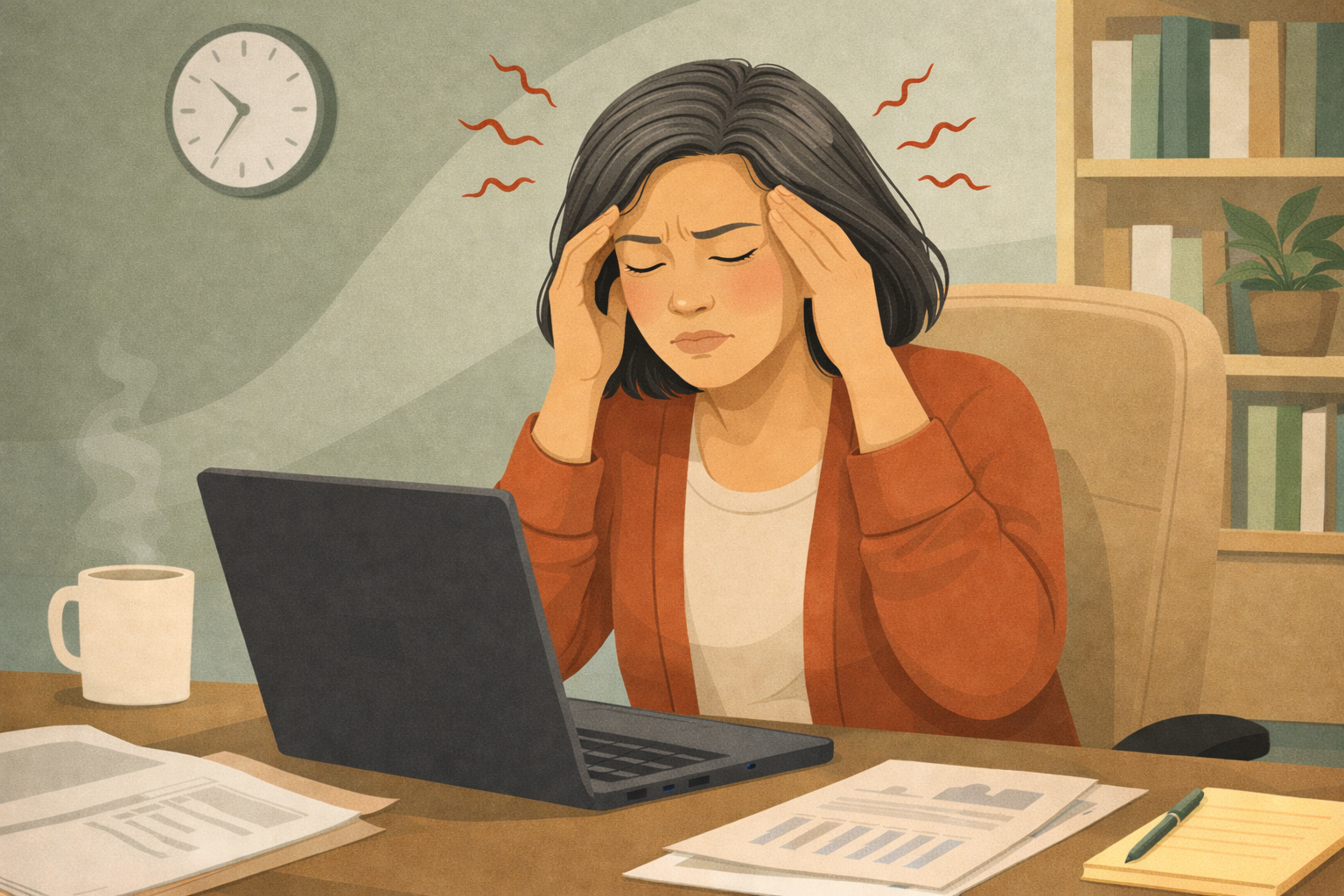
Your body may be holding what your mind has been managing. Sometimes your body speaks before your mind does. That tight chest, racing heart, or constant exhaustion might be your body’s way of expressing unprocessed stress.
If you’ve read Dr Bessel van der Kolk’s book, ‘The Body Keeps the Score’, this may sound familiar.
You might feel chronic tension
Your jaws feel clenched all the time
Your stomach flares during stressful periods
You experience recurring headaches during high-pressure periods
Your shoulders are so tight, and never quite relax
While medical assessment is always important, stress and emotional patterns can influence how the nervous system and body respond.
You might wake up already feeling tense, experience digestive issues, headaches, or mysterious aches that have no medical explanation. Over time, living in fight-or-flight mode can leave you feeling drained, disconnected, and frustrated with your body.
Now pause for thought…
Who would you be, without these looping thoughts, feelings and behaviours?
What would become available to you, when these things are not running the show?
How RTT may help with stress-related physical symptoms
Rapid Transformational Therapy® (RTT) can support the emotional patterns contributing to chronic stress responses, helping your system feel safer and more regulated. It can help tune into the deeper emotional patterns behind those symptoms so your mind and body can finally relax and restore balance.
If you’re curious whether RTT may support your stress-related symptoms, reach out for a consultation to discuss your situation.
Learn more about the RTT process
What is RTT
Learn how Rapid Transformational Therapy® uncovers and rewires the beliefs driving your thoughts, behaviour and results.
Where RTT may help
See how this work can shift the patterns that feel stuck, repetitive or hard to break.
What to expect
Find out exactly how the process works - and what makes the change last.


Book a clarity call
If you’re ready to address the beliefs and emotional patterns behind chronic stress, book your FREE 15-30 minute confidential phone call.
There’s no obligation, just an informal conversation to explore whether RTT is the right approach for you.